There is a universal truth that every seasoned traveler comes to understand: the soul of a destination is not found within the hallowed halls of its museums or the glossy pages of its guidebooks, but rather on the streets, at the humble stalls and makeshift carts where locals gather. Street food is the original fast food, a culinary tradition as ancient as civilization itself. It is the delicious, affordable, and authentic heartbeat of a community, serving up history, geography, and identity in every single bite . To eat street food is to participate in a living, breathing cultural archive, one that has been passed down through generations, shaped by migration, innovation, and the simple need to survive. This is a journey across the globe, exploring the traditional exotic street foods that are far more than just meals—they are edible stories.
A Bite of Antiquity: The Historical Roots of Street Dining
The concept of eating on the go is nothing new. Archaeological evidence and ancient texts reveal that street food has been a staple of human society for millennia. In the ruins of Pompeii, archaeologists have uncovered entire streets lined with food stalls, complete with large metal cooking vessels where vendors would serve soups and stews to workers, closing up shop at night with grates much like their modern counterparts . The ancient Greeks had a taste for small fried fish, a popular street-side snack they adopted from Egyptian customs in the port of Alexandria .
In Asia, the tradition is equally deep-rooted. In the Indian subcontinent, literature from the Tamilakam region dating back to the 1st century CE references a thin rice-and-lentil crepe, the clear precursor to today’s beloved dosa, while texts from around 100 BCE mention deep-fried lentil cakes that would evolve into the modern vada . These weren’t just meals; they were the edible expressions of a civilization, evolving over centuries from ancient kitchens to the bustling bazaars of today. To taste a kachori or a pani puri in a modern Indian city is to connect with flavors that have whispers of dynasties, migrations, and forgotten kitchens . Street food is living history, and its vendors are the unofficial curators.
The Middle East and Mediterranean: Crossroads of Culture on a Plate
The lands bordering the Mediterranean and stretching into the Middle East have always been crossroads of trade and conquest, and their street food reflects this rich, layered history. In Egypt, one dish stands as a monument to this cultural fusion: koshary. This humble, hearty, and utterly delicious dish is a symphony of carbs and legumes, layering rice, brown lentils, macaroni, and chickpeas, all topped with a spicy tomato sauce, garlic vinegar, and a generous helping of crispy fried onions . It may sound like a random collection of ingredients, but its story is pure Egypt.
Koshary took shape in the 19th century during a period of intense global interaction. Its foundation of rice and lentils is said to have been inspired by Indian khichdi, brought during the time of British occupation. Italian immigrants later contributed the pasta and tangy tomato sauce, and Egyptians added the final, iconic touches—the crispy onions and the sharp, garlicky daqqa . Over time, this hybrid creation became something unmistakably and profoundly Egyptian. It is known as “the meal of equality,” a dish so affordable and filling that it is shared by everyone, from wealthy businessmen to construction workers . In December 2025, this cultural significance was formally recognized when UNESCO inscribed “Koshary, daily life dish and practices associated with it” on its Representative List of the Intangible Cultural Heritage of Humanity, cementing its status not just as a national dish, but as a global cultural treasure .
Venture further east into Turkey, and the streets of Istanbul beckon with the aroma of two very different but equally iconic foods. The first is börek, a marvel of Ottoman-era pastry craftsmanship. Made from paper-thin layers of phyllo dough, it is filled with savory ingredients like cheese, spinach, or spiced meat, then baked until golden and impossibly flaky . It’s a dish that requires centuries of perfected technique, with regional variations that range from simple spirals to intricate, rose-shaped masterpieces.
For the more adventurous eater, Turkey also offers kokoreç. This beloved street food features seasoned lamb intestines, meticulously wrapped around a skewer and grilled over an open flame . The slow grilling process imbues the meat with a tantalizing smokiness, and when the tender, spiced meat is finally chopped and stuffed into crusty bread, it becomes a flavor-packed sandwich that is a late-night staple across the country. It’s a dish born of the philosophy of using every part of the animal, transforming a humble ingredient into a celebrated delicacy.
The Indian Subcontinent: A Symphony of Spices and Textures
India’s street food is perhaps the most diverse and vibrant on the planet. It is an alchemy of culture, climate, and sheer creativity . In the chaotic, colorful lanes of Mumbai, Delhi, and Kolkata, every corner offers a new sensory explosion. Perhaps the most interactive and beloved of these is pani puri. This genius creation consists of tiny, hollow, crispy spheres called puris. A vendor, with the speed of a magician, cracks a small hole in the top of each one, stuffs it with a mixture of spiced potatoes and chickpeas, and then dunks it into a bowl of flavored water—or “pani” .
The experience of eating pani puri is a mandatory right of passage. The pani can range from mildly tangy and sweet to a mind-clearingly spicy concoction of mint and chili. The entire sphere must be popped into the mouth and consumed in a single, glorious bite. As it explodes, it releases a flood of textures and tastes: the crunch of the shell, the softness of the filling, and the sharp, cool, spicy water. It’s a chaotic, messy, and absolutely perfect bite that embodies the Indian philosophy of balancing flavors. Locals are fiercely loyal to their favorite stalls, where generations of vendors have perfected this ancient dance of assembly-line perfection .
Beyond the bustling metropolises, regional specialties tell the stories of their local environments. In the winter, the streets of Old Delhi transform with the arrival of safed gajar ka halwa, a dessert made from pale white carrots slowly simmered in milk until they reduce into a sweet, fragrant, and richly textured pudding . In the ancient city of Varanasi (Banaras), you might find tamatar chaat, a tangy and messy preparation where tomatoes are quickly cooked with jaggery, asafoetida (hing), and sev (crunchy chickpea noodles), and served in a bowl made of leaves . Each dish, from the cloud-like makhan-malaiya of Lucknow to the earthy undhiyu of Gujarat, is a whisper of its place, its season, and its soul .
East Asia and the Pacific: Tradition, Technique, and a Touch of Daring
In East Asia, street food is an art form, balancing deep tradition with playful innovation. In Japan, karaage represents the pinnacle of fried chicken perfection. Unlike its American counterpart, karaage starts with bite-sized pieces of chicken thigh, marinated in a mixture of soy sauce, sake, ginger, and garlic . The magic, however, lies in the coating. The chicken is tossed in potato starch (katakuriko), which, when fried, creates a light, impossibly crispy, and shatteringly delicate shell that gives way to a juicy, flavor-packed interior . It’s a testament to the Japanese dedication to perfecting a single craft, found everywhere from high-end restaurants to convenience stores at 2 AM.
Travel to the island of Taiwan, and the night markets of Taipei offer a sensory overload of classic and bizarre delights. At the Raohe Street Night Market, you can watch vendors pull pepper pork buns out of tandoor-style ovens—hot, crusty, and bursting with peppery pork and scallions . But the market is also a playground for the adventurous. You might find “fire and ice”—hot mochi balls served on a mountain of shaved ice—or a freshly squeezed sugar cane juice. For the truly daring, there is the infamous stinky tofu, whose pungent aroma can be detected from blocks away, but whose fermented flavor, often served with pickled vegetables, is surprisingly complex and tasty .
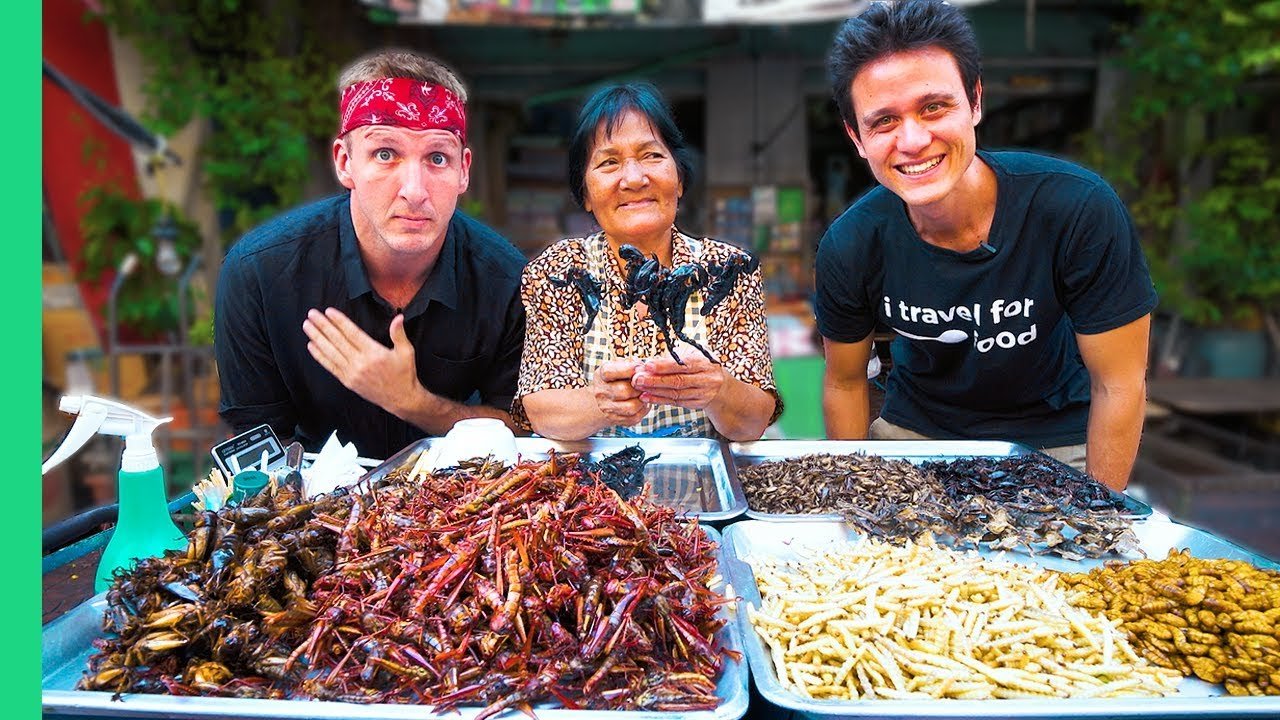
Speaking of daring, the Philippines offers balut, a fertilized duck embryo boiled and eaten from the shell. It’s a snack that often makes headlines for its “shock value,” but for Filipinos, it’s a beloved comfort food, a source of protein, and is even considered an aphrodisiac . The proper way to eat it is to crack open the top, sip the savory, warm broth, and then sprinkle the embryo with salt or vinegar before eating it in one go. It embodies the Filipino value of “waste nothing, savor everything” . Similarly, in parts of China, you might encounter scorpion skewers or fried tarantulas—snacks born of regional environments and survival, now celebrated as unique culinary experiences .
Africa and the Middle East: Simple Pleasures with Profound Depth
On the western edge of North Africa, Morocco’s ancient medinas offer a different kind of street food magic. Here, the air is filled with the scent of spices and sizzling oil, drawing you to vendors making sfenj. These are Morocco’s answer to the doughnut, but they are a world away from the sugary, mass-produced variety. Sfenj are simple rings of dough made from just flour, water, salt, and yeast, which are hand-stretched and dropped into hot oil . Watching a master sfenj maker is mesmerizing; they can spin and stretch the dough into perfect circles in seconds, creating a texture that is crispy on the outside and impossibly light and airy on the inside. Eaten plain, dusted with sugar, or soaked in honey with a glass of mint tea, it’s a simple pleasure that has been feeding Moroccans for centuries.
Further south, in Montenegro, a small coastal town celebrates its own unique culinary treasure. The bamija (okra) of Ulcinj is more than just a vegetable; it is a symbol of the town’s identity. Every year, the “Days of Bamija” festival takes over the ancient fortress city, with thousands of people crowding the narrow streets to taste this beloved dish . Prepared as a rich, hearty stew with veal or lamb, tomatoes, and onions, “Ulcinj-style Bamija” is so culturally significant that it has been officially protected as a traditional specialty of Montenegro. As one German visitor at the festival remarked, it’s “something different and… almost unreal in its authenticity” . It’s a powerful example of how a simple ingredient, when woven into the fabric of a community, can become a source of immense pride and a living tradition.
The Americas and Beyond: New World Fusions and Immigrant Stories
The street food of the Americas is a vibrant tapestry woven from indigenous ingredients and immigrant influences. While the taco is now a global superstar, its origins are deeply rooted in Mexican history. The word “taco” is believed to have originated in the 18th-century silver mines, referring to the paper wrappers used for dynamite charges, which resembled the way fillings are wrapped in tortillas . From these humble beginnings, tacos spread through Mexican immigrant communities, becoming the ultimate customizable street food.
In South Africa, the bunny chow tells a powerful story of migration and adaptation. This dish, consisting of a hollowed-out loaf of white bread filled with spicy curry, originated in the Indian community of Durban in the 19th century . Indian migrants, brought to South Africa as indentured laborers, adapted their traditional curries to local ingredients. Because they were forbidden from entering restaurants during the apartheid era, they needed a portable way to carry their lunch. A hollowed-out bread loaf proved to be a sturdy, edible container, far more practical than a delicate naan . Today, bunny chow is a proudly South African meal, a delicious and poignant reminder of the country’s complex history and the resilience of its people.
The Future of Flavor: Preservation and Innovation
As we have seen, street food is the ultimate expression of local culture. It is a dynamic, living archive that adapts and evolves while fiercely protecting its core traditions. The recent UNESCO recognition of koshary is a landmark moment, validating what locals have always known: that their everyday meal is a global treasure worthy of protection . Similarly, China’s Shaxian snacks, with over 200 varieties, have been recognized as national intangible cultural heritage, representing a culinary tradition shaped by hundreds of generations and now spreading across the globe .
These designations are not about freezing recipes in time, but about safeguarding the knowledge, the rituals, and the community spirit that surround them. As one Egyptian expert noted, the recognition acts as “a powerful catalyst for maintaining authenticity and raising standards… transforming the humble street food into a globally recognized cultural treasure while preserving its unique social traditions” .
So, the next time you find yourself in a new city, skip the white-tablecloth restaurants. Follow your nose down a side street, join the line of locals, and point at something sizzling on a grill. In that messy, delicious, and unforgettable bite, you won’t just be tasting food; you will be tasting history, community, and the very soul of a culture.